The numbness of ChatGPT ads - OpenAI’s inevitable shift emphasizes the quiet cost of “free” AI
Yawn… OpenAI is launching ads in ChatGPT.
If I had been a marketing expert, I probably would have been excited. Advertising follows attention, and ChatGPT has plenty of it. For brands with the budget, this opens a new kind of presence allowing them to position themselves directly inside the conversations where decisions take shape.
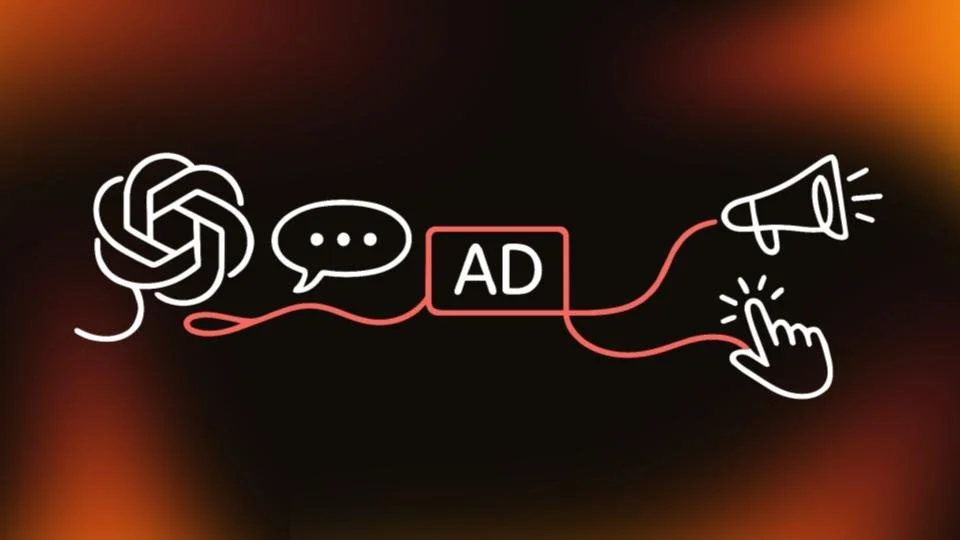
For those without that budget, the shift could feel different. Visibility risks becoming less about genuine relevance and more about who can afford to be seen. Competing with paid placement instead of earned attention has long defined the ad-supported internet. There’s little reason to think that this would have been the exception.
As a rebel in the world of tech feudal lords, I'm actually neither excited nor surprised. I am, though, quite numb.
The economics forcing the shift
OpenAI is losing big money. For 2025, the estimated operating losses were USD 9bn (1). Actual net losses are most likely more than twice as high (2). They have to do something to make more money fast. Against that backdrop, implementing ads becomes an obvious decision. The recent announcement from OpenAI is that ads will be rolled out for their ’free’ and ‘Go’ tier users (4).
ChatGPT has somewhere around 900 million users on a weekly basis. Shockingly, only about 5% of these users are actually paying for a license (3). This means that 95% of the users of ChatGPT represent pure loss. From a business standpoint, I can’t fault Sam Altman, CEO of OpenAI, for turning to ads. As users, we are already used to ads funding the free versions of platforms such as YouTube and Spotify. Do I like it? No, as an individual, I hate ads. As a business owner, though, I can dislike ads as much as I want, but one still needs to play the marketing game if one wants business. In this aspect, OpenAI is finally opening the gate to the promised marketing nirvana of chatbot land.
The next layer of intrusion - your secrets, their business model.
Those who know me personally, or from my newsletters or keynotes, are perhaps a bit surprised by my lack of engagement on this topic. I'm sorry for having kept you in confusing suspense!
My numbness stems from the massive abuse of personal data that we have been victims of for about a decade and half through the rise of social media platforms. It's easy to point at American tech players, but let's not forget that the Swedish company Spotify has significant information about its users through their music and podcast listening patterns, and they monetise freeriders through targeted marketing.
The decision to launch ads in ChatGPT does indeed initiate a new dimension of intrusiveness. Under the headline 'Our ads principles' in this article (4), Fidji Simo, CEO of applications at OpenAI, states:
Answer independence: Ads do not influence the answers ChatGPT gives you. Answers are optimized based on what's most helpful to you. Ads are always separate and clearly labeled.
However, on their information page for potential advertisers (5), they state:
OpenAI is exploring advertising as a way for businesses to connect with people when they’re actively researching and ready to take action in ChatGPT.
From an analytical point of view, these two paragraphs can be true at the same time. But combined, they mean to say that what you ask or tell ChatGPT (and the answer provided) will be used to systematically target the ads towards you as an individual. So why is this different from social media, YouTube, and Spotify? It's not, but it is even more intrusive. When every little detail of chat history, emotions and information you share, your choice of words revealing your values, biases, religious or political inclinations and every personal secret that you unconsciously revealed through your interaction with ChatGPT are now fair game for the AI machinery, your ability to withstand undue influence is gone with the wind.
The price of free
This development was predictable, I would even go as far as inevitable. Not because the technology itself is inevitable, but because powerful and wealthy humans faced with the opportunity to become even more powerful and wealthy are almost always going to grasp the opportunity with both hands.
Businesses have to resort to utilising the marketing opportunities available to them. Good old generic TV commercials are both out of most companies' league and out of fashion. They have been slowly replaced by digital ads on platforms and in Google search, where visibility could be bought and optimized. Now, that same migration of attention is moving again into chatbots and AI-driven search. And unlike search, where you choose what to click, chatbots choose what to show you.
What matters is how conscious we are about what we share about ourselves in digital channels, what we withhold, and which privacy settings we apply. Because in these systems, value is rarely created without an exchange. And in the end, the oldest truth of the digital age still applies: if something is for free, YOU are the product.
As AI systems begin to influence not only what we see, but what we choose, organisations need to understand the strategic and behavioural implications.
Through keynotes and advisory engagements, I help leadership teams make sense of these shifts and what they mean for the future of business. Feel free to get in touch to continue the conversation.

About the Author
Elin Hauge is a keynote speaker, AI strategist, and trusted advisor to business leaders and boards. She specialises in helping organisations make sense of artificial intelligence beyond the hype, connecting technology to strategy, governance, and real-world value. With a multidisciplinary background in physics, mathematics, business, and law, Elin brings both analytical rigour and practical perspective. Her talks and advisory work empower leaders to ask better questions, make wiser decisions, and navigate AI with confidence.
References
Fortune. (2025, November 12). OpenAI cash burn rate, annual losses through 2028; profitable by 2030, financial documents show. Fortune. https://fortune.com/2025/11/12/openai-cash-burn-rate-annual-losses-2028-profitable-2030-financial-documents/
Rubino, D. (2025). OpenAI lost $1.2 billion in the previous quarter. Thurrott. https://www.thurrott.com/a-i/openai-a-i/329108/openai-lost-12-billion-in-the-previous-quarter
The Register. (2025, October 15). OpenAI’s ChatGPT remains popular while few pay, analysis finds. The Register. https://www.theregister.com/2025/10/15/openais_chatgpt_popular_few_pay/
OpenAI. (n.d.). Our approach to advertising and expanding access. Retrieved [February 26, 2026], from https://openai.com/index/our-approach-to-advertising-and-expanding-access/
OpenAI. (n.d.). Advertisers. Retrieved [February 26, 2026], from https://openai.com/advertisers/