My top five learnings as an international keynote speaker
"Elin, you are a good speaker, but you are not quite ready for the big stages. You still have work to do". This was the feedback that Nina Spegel, CEO of MySpeaker Sweden, gave me after a large-stage keynote in November 2022. After my keynote came Iron Maiden’s vocalist Bruce Dickinson. Having my performance compared to Bruce Dickinson was harsh. It was also a much-needed wake-up call. Succeeding as a keynote speaker on large international stages is a very different game from doing a few paid keynotes on your home turf.
“Feedback is a gift”, they say. Sometimes I hate gifts. After Nina Spegel's feedback, I vowed put in the work to get ready for the large stages. And so I did. Along the way, Maria Franzoni has been my most important mentor (check out her bookThe Bookability Formula). The transition from being a decent speaker on my home-turf to being a professional speaker on international stages was surprisingly arduous and comprehensive.
Here are my personal top five learnings.
1. To stand out from the rest, you need to stand FOR something
I have met many speakers, in particular female speakers, who spend a lot of effort trying to be unassailable. Don't challenge, don't provoke, don't make arguments which may stir resistance or counterarguments. Congratulations. You have just become the most forgettable speaker in the market. To get to the bigger stages with higher fees, you have to make yourself worth the audience's time. Likeability is essential, but that doesn’t mean you should blend in with the background. On the contrary, you have to stand out from the large crowd of speakers who compete for the same speaking slot. To stand out, you have to stand FOR something of relevance and interest to the audience.
2. Listen to the client, not your ego
When discussing with the client before closing the deal, don't just go on a rant about your perspectives. Let the client speak first and let them share what they want to achieve. I have developed my own model for keynote design and preparation. The first stage consists of answering three questions:
1) Who's the audience and where are they with respect to your topic?
2) What does the client need you to achieve in order for them to pull off a successful event?
3) Based on 1 and 2, what should your main message be?
I must admit that I failed badly at this recently, and I immediately knew I had just thrown away a five figure (in Euros) fee. I beat myself up over this for a day, and then I cleaned out the cobwebs of my own methodology. I'm back on track.
3. Always aim to be the all-time favourite speaker to work with
The best feedback I can get is when agents tell me I'm one of their favourite speakers to work with. Why do they say that? Because I'm easy to work with. Keep in mind that the agents and event producers are in this business to make a living. By making it easy for the client to choose you, preferably not just once but several times, you also ensure the success of all the other people involved.
This doesn't mean that you should say yes to anything and everything. It means that you should be predictable and proactive, and take action to deliver on things you know matter, even if the client doesn't ask for it. If a problem arises, find solutions quickly and support the client proactively. Happy clients are essential. Make it easy for the client to be happy with you. And when the client is happy, the agent and the event producer are happy. (Remember, sh*t happens! What matters is how you overcome.)
4. You have to continuously reinvent yourself
I have met many speakers who have one keynote which they reuse over and over again, like a theatre piece. That might work for some speakers on some topics, but my experience is that the need to tailor the storyline to the client's context is greater than the client's willingness to pay for a one-size-fits-all approach. Tailoring your storyline to each individual client is hard work. The secret lies in scalable tailoring. It's not about recreating your storyline every time. It is about delivering the experience of a tailored keynote.
5. Prepare and perform like a prima ballerina
I now see that what the event bureau manager I mentioned at the beginning of this article was actually trying to tell me was that she saw my potential, but I still had work to do on my delivery skills before I was really ready forlarge-scale productions and four-figure audiences. When you are used to speaking at local events, it's easy to think that you're good to go for all stages and audiences. You are not. It's like being the queen (or king) of tango in the local nightclub versus being the prima ballerina at the national opera. Both performances are about dancing, but from there they are in completely different leagues.
And that's OK, because most people are more than content with being the local tango queen or king. But if your mission is to be the prima ballerina on the global stage, you have to develop the capabilities required. You have to prepare and execute as an international professional every time.
Looking back and moving forward
A while back I reminded Nina Spegel about the feedback she gave me in November 2022. She smiled and replied: "...and you did it."
Yes, I did.
And the work doesn't stop. The big stages, complex productions, and professional crews don't just reward presence; they demand rigorous preparation, genuine client focus, and the discipline to keep evolving. That's the standard I hold myself to on every engagement.
Speaking internationally has taught me that the most valuable conversations happen when we challenge assumptions and explore new perspectives together.
If you would like to bring that kind of conversation to your organisation or event, I would be happy to hear from you.
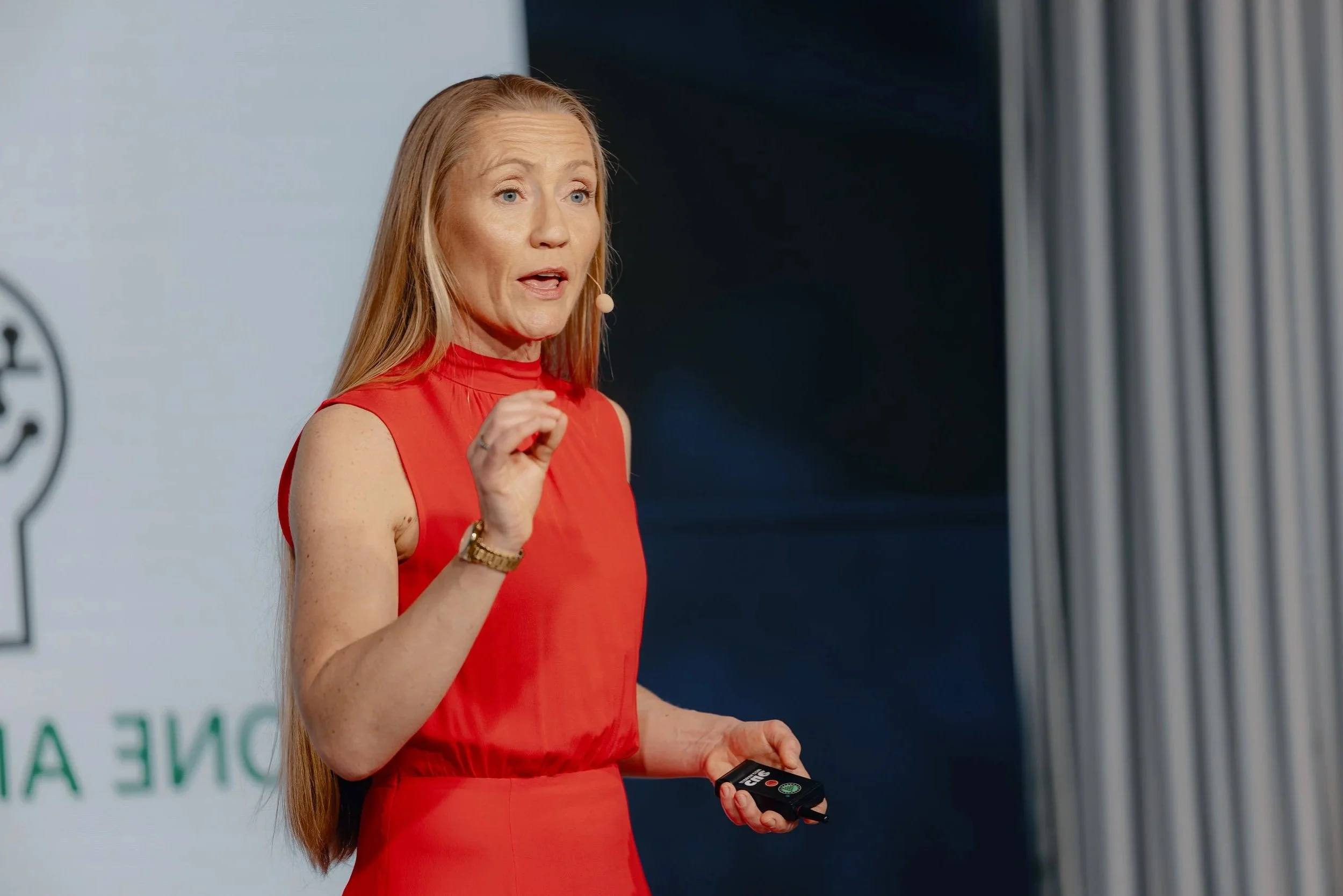
About the Author
Elin Hauge is a keynote speaker, AI strategist, and trusted advisor to business leaders and boards. She specialises in helping organisations make sense of artificial intelligence beyond the hype, connecting technology to strategy, governance, and real-world value. With a multidisciplinary background in physics, mathematics, business, and law, Elin brings both analytical rigour and practical perspective. Her talks and advisory work empower leaders to ask better questions, make wiser decisions, and navigate AI with confidence.